Understanding the Structural Superiority of Welded Mesh
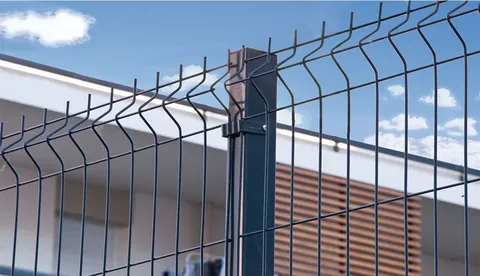
In the evolving landscape of Texas perimeter security, the welded mesh panel fence has emerged as the gold standard for both commercial infrastructure and high-end residential estates. Unlike traditional chain-link fencing, which relies on a flexible, woven diamond pattern, these panels are engineered through a process of high-voltage electrical resistance welding. Every intersection of longitudinal and transverse steel wires is fused together to create a rigid, monolithic grid. This fundamental difference in manufacturing results in a fence that does not sag, unravel, or deform under pressure, making it an essential component for projects requiring long-term structural integrity.
For a general contractor like KDK Power Contractor LLC, the choice of a welded mesh panel fence is driven by the physics of the material. The rigid nature of these panels allows for precision alignment that woven fences cannot achieve. When we install these systems across the San Antonio and San Marcos corridor, we are looking at a product that provides a “disappearing” aesthetic offering clear lines of sight for security cameras while maintaining a formidable physical barrier that resists manual breaching attempts.
Comparative Analysis: Welded Mesh vs. Traditional Fencing
To appreciate the value of a high-quality perimeter, one must compare it against the industry’s older standards. Chain-link fencing is often the “default” due to its low initial cost, but it fails in two critical areas: security and maintenance. A standard pair of bolt cutters or even heavy-duty pliers can unravel a chain-link fence in seconds. In contrast, the apertures of a welded mesh panel fence especially in “358” high-security configurations are too small to provide a handhold for climbing or a gap wide enough for cutting tools to gain leverage.
Furthermore, the architectural impact of professional mesh is significantly more sophisticated. In New Braunfels and Seguin, commercial developers are increasingly moving away from the “industrial” look of chain link in favor of the sleek, vertical lines of powder-coated steel. From a General Contractor’s perspective, the total cost of ownership is lower with these systems. Because they are self-supporting and modular, they do not require the constant tensioning adjustments that plague woven wire systems, ensuring the perimeter remains secure and visually appealing for decades.
Technical Specifications: Galvanization and Coatings
In the harsh Texas climate, where humidity and heat can accelerate oxidation, the coating technology of your fence is as important as the steel itself. Most high-quality installations utilize one of two galvanization processes: Galvanized Before Weld (GBW) or Galvanized After Weld (GAW). At KDK Power Contractor LLC, we emphasize the use of GAW or high-performance powder coatings. When a welded mesh panel fence is galvanized after the welding process, the zinc coating seals the weld spots the most vulnerable points for rust ensuring that the entire panel is protected from the inside out.
Beyond simple galvanization, many modern applications utilize a “Duplex Coating” system. This involves a primary layer of zinc followed by a specialized polyester powder coating (PPC). This doesn’t just provide a color choice (like the popular signal black or forest green); it adds a secondary chemical barrier against the elements. For properties near the Gulf or in high-traffic San Antonio industrial zones, this dual-layer protection is the difference between a fence that lasts 30 years and one that begins to corrode within five.
Security Applications: From Industrial Hubs to Residential Privacy
The versatility of this fencing style allows it to serve multiple sectors with equal efficiency. In commercial construction and roadwork, we utilize heavy-gauge steel for equipment yards, utility substations, and bridge bypasses. In these environments, a welded mesh panel fence serves as a “non-climb” barrier that protects sensitive infrastructure. The high-visibility nature of the mesh is a tactical advantage, allowing security personnel and law enforcement to monitor the interior of a site from the street without a “blind spot” created by solid walls.
On the residential side, particularly for larger estates in San Marcos and Kyle, these panels provide a sophisticated boundary that doesn’t obstruct the natural beauty of the Texas Hill Country. We often see them used as “deer fencing” or pool enclosures where the homeowner wants a secure perimeter that feels open and airy. By choosing a black or dark bronze finish, the fence effectively blends into the landscape, providing security that is felt but not necessarily “seen.”
The Engineering of Installation: A General Contractor’s Perspective
Installation is a task that requires the precision of a General Contractor rather than a simple handyman. Because the panels are rigid, there is zero room for error in post-placement. If a post is off by even a half-inch, the pre-fabricated welded mesh panel fence will not seat correctly in its brackets. This is why Aime Tamguia Mbianda and the KDK team utilize laser-leveling and precise site surveying before a single hole is augered.
In Central Texas, soil conditions vary from rocky limestone to expansive clay. A proper installation must account for “clay heave.” We set our posts at a depth that ensures the center of gravity remains low, utilizing high-PSI concrete footings that can withstand the wind loads common during Texas storm seasons. Furthermore, for high-security sites, we implement “anti-tamper” hardware specialized bolts that can only be tightened and not loosened ensuring that the panels cannot be removed from the outside.
Strategic Site Integration and Civil Engineering
As a full-service General Contractor, KDK Power Contractor LLC views a fence as part of a larger civil engineering ecosystem. When we install a perimeter for a client, we aren’t just looking at the fence line; we are looking at the drainage, the slope, and the underground utilities. A common mistake made by trade-only fencers is blocking the natural flow of water, which leads to erosion at the base of the fence posts. We ensure that a welded mesh panel fence is “stepped” correctly along the grade to maintain a tight gap at the bottom while allowing for proper water runoff.
This 360-degree approach also involves the integration of access control. A secure perimeter is only as strong as its weakest gate. We engineer custom welded swing and slide gates that match the panels perfectly, using heavy-duty hinges and automated motor systems that can handle the weight of high-tensile steel. This ensures that the transition from roadwork to private property is seamless, secure, and technologically advanced.
Why KDK Power Contractor LLC is the Texas Authority
Choosing the right partner for your fencing project means choosing someone who understands the “why” behind the “how.” KDK Power Contractor LLC brings years of experience in residential construction, commercial builds, and general roadwork to the table. We don’t just sell you a product; we provide a security consultation. We analyze your site’s specific vulnerabilities and recommend the exact wire gauge and aperture size needed to mitigate your risks.
Our commitment to “Precision Without Compromise” means that every weld is checked, every post is plumb, and every panel is perfectly aligned. Whether you are protecting a San Antonio warehouse or a New Braunfels family home, you deserve a perimeter that reflects the value of what’s inside. Contact Aime Tamguia Mbianda today to discuss your project requirements and experience the difference that a General Contractor’s perspective brings to the world of high-security fencing.
FAQ Summary
- What is the best mesh for high security? The 358-mesh is the industry leader for “non-climb” applications.
- How long does a galvanized welded fence last? With GAW or Duplex coatings, these fences can exceed 30 years in Texas.
- Can welded mesh be installed on a slope? Yes, using the “stepping” method, panels can follow any terrain while maintaining security.
- Is welded mesh better than chain link? Yes, in terms of security, aesthetics, and long-term maintenance, it is the superior choice.